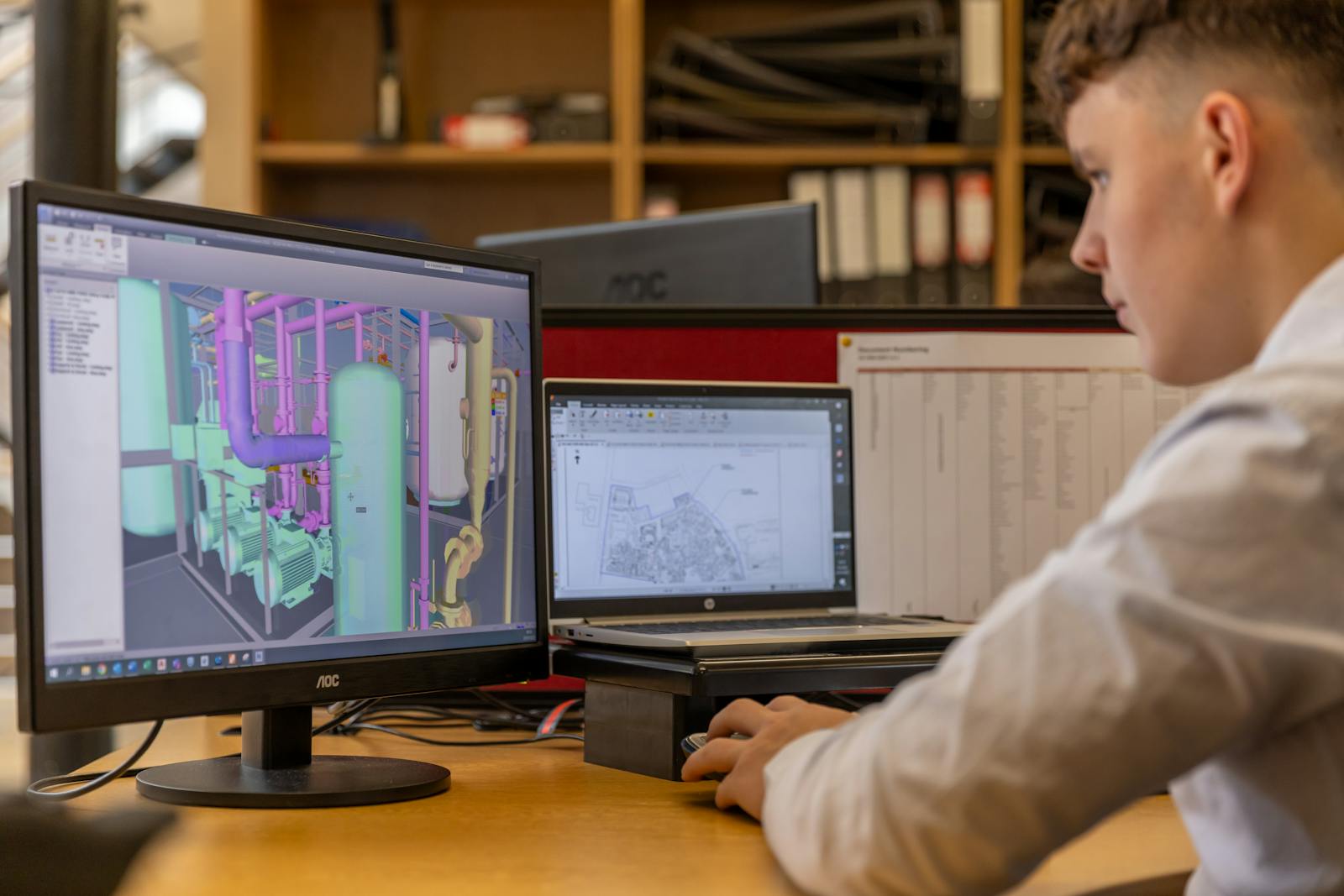
Steel detailing turns the engineer's design into fabrication-ready information: a 3D model of every member and connection, from which shop drawings and CNC data are produced. It's the stage where clashes and connection problems are caught before any steel is cut, when they cost nothing to fix.
From design intent to shop drawings
The structural engineer's general arrangement (GA) drawings show design intent: member sizes, levels and grids. Detailing takes that and produces the information a workshop actually builds from:
- A 3D model of the whole frame, member by member
- Assembly and single-part shop drawings for every piece
- Material lists and bolt schedules
- CNC data driving the saws, drills and profiling machines directly
What the 3D model drives
Modern detailing is done in industry-standard 3D modelling software. The model isn't just a drawing source: it exports machine data straight to the fabrication line, generates accurate material take-offs, and can be co-ordinated against the architectural and building-services models to catch clashes before fabrication. An IFC model from your team speeds this up considerably.
The approval workflow
Shop drawings are issued for approval before fabrication. The engineer and design team comment, the detailer revises, and the drawings are released for construction. Getting this loop turned around quickly is one of the biggest levers on the overall fabrication programme.
Why detailing quality decides the job
A detailing error caught in the model costs nothing. The same error caught on site, after the steel is cut, drilled and delivered, costs weeks and rework. Accurate detailing is the cheapest insurance on a steel package, which is why we treat design and steel detailing as part of the job, not an afterthought.
Common questions
- What's the difference between GA drawings and shop drawings?
- General arrangement (GA) drawings show the engineer's design intent: member sizes, grids and levels. Shop, or fabrication, drawings detail every individual piece for manufacture, including holes, welds, bolts and cutting information.
- What is IFC and why does it help detailing?
- IFC is an open BIM exchange format. An IFC model lets the steel detailer co-ordinate against the architectural and services models for clash detection, and speeds up the detailing because the geometry is already defined.
- Do you detail from our model or our drawings?
- Either. We can detail from PDF and CAD drawings, but a 3D or IFC model speeds the work and improves co-ordination. Send whatever you have and we'll advise.