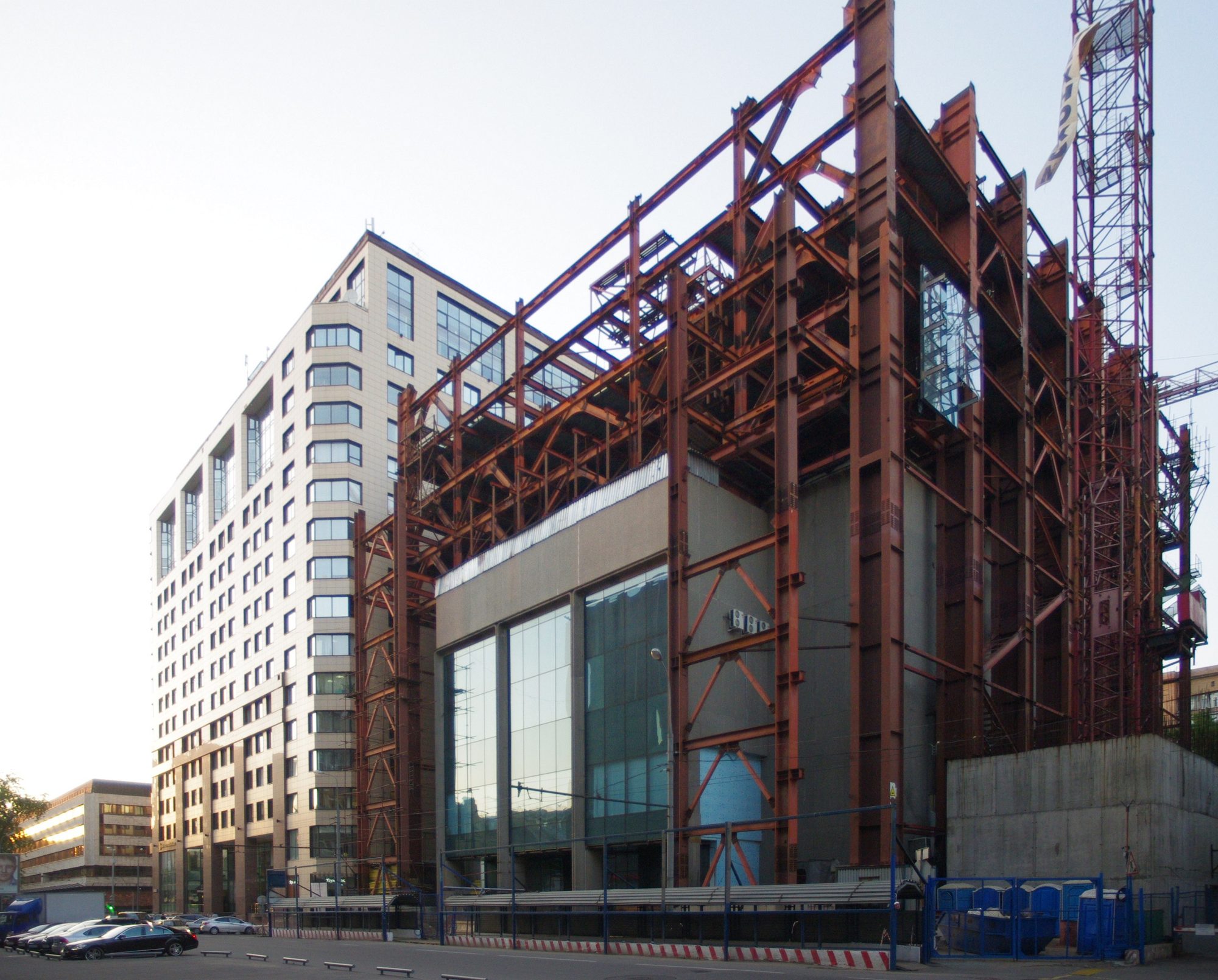
BS EN 1090 sorts structural steelwork into four execution classes, EXC1 to EXC4, by how serious the consequences of failure would be. EXC1 covers simple, low-risk structures; EXC2 is the default for most buildings; EXC3 covers higher-consequence commercial and multi-storey work; EXC4 is reserved for exceptional structures.
What an execution class actually controls
An execution class is not a grade of steel; it's the level of control applied to how the steelwork is made and erected. Moving up the classes tightens the requirements across:
- Welding quality requirements (to BS EN ISO 3834) and welder qualification
- The extent of non-destructive testing (NDT) of welds
- Traceability of materials and consumables
- Inspection, tolerances and documentation
- The factory production control (FPC) system behind the CE/UKCA marking
All four classes are made under BS EN 1090. A higher class means more checking, more testing and more documentation, which is why it matters for higher-consequence buildings.
How the execution class is determined
The class isn't picked at random. BS EN 1090-2 sets it from a combination of three factors:
- Consequence class (CC1–CC3): how severe the consequences of failure are, taken from BS EN 1990
- Service category (SC1–SC2): whether the structure is largely statically loaded, or also subject to fatigue such as crane gantries (seismic action rarely governs in the UK)
- Production category (PC1–PC2): the complexity of fabrication, for example the welding processes and steel grades involved
Those combine, via the matrix in BS EN 1090-2, into the execution class. In the UK, PD 6705-1-1 gives recommendations on choosing the right one. If a project specifies no class at all, BS EN 1090-2 defaults to EXC2, so on commercial work it's worth confirming the class explicitly rather than letting it default.
EXC1 to EXC4 at a glance
- EXC1: simple, low-consequence structures such as agricultural buildings and single-storey frames with light loading
- EXC2: the default for the majority of general building structures
- EXC3: higher-consequence work, including most multi-storey, public and larger commercial buildings
- EXC4: exceptional structures where the consequences of failure are extreme, such as stadia and major bridges
Which execution class you need
Execution Class 2 is the class for the majority of general building structures, the everyday commercial steelwork across offices, light industrial, retail and many residential schemes. It is the class we fabricate to, under an audited factory production control process. Read more on our BS EN 1090-1 EXC2 page. Higher-consequence work, such as most multi-storey and public buildings, is specified at EXC3; where your project calls for it, confirm the class with your structural engineer.
If you're specifying steel and unsure which class your project needs, send the drawings and we'll confirm it as part of the quote.
Common questions
- What execution class is most commercial steelwork?
- Most multi-storey, public and larger commercial buildings are EXC3, because the consequences of failure are high. General building structures are often EXC2, and simple single-storey or agricultural frames can be EXC1.
- What happens if no execution class is specified?
- BS EN 1090-2 defaults to EXC2 where no class is specified. On commercial projects it's better to confirm the class explicitly against the consequence, service and production categories rather than rely on the default.
- Is a higher execution class always better?
- No. The class should match the structure. Specifying a higher class than the design needs adds testing and cost without benefit. The class is chosen from the consequence, service and production categories, with PD 6705-1-1 giving UK guidance.